


BLII-D50-50A Okuma
Wake Industrial LLC is not an authorized distributor of this product.
Wake Industrial LLC is not an authorized distributor of this product.
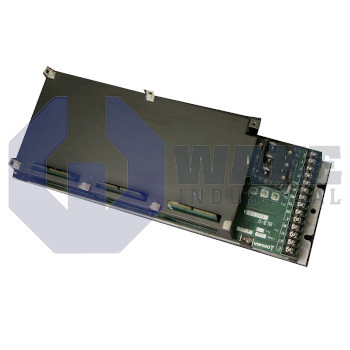
The Okuma BLII-D50-50A is a 2-axis servo amplifier from the BL Servo Motors series. It works with a main circuit supply of 3-phase 200 VAC and a control circuit supply of 1-phase 100 VAC, and supports input frequencies of 50 or 60 Hz. The amplifier delivers a continuous output current of 13 Arms and can reach a max output current of 42 Amps peak.
Internal Product Review
The BLII-D50-50A is an Okuma 2-axis servo amplifier that feels well engineered for precise multi-axis machine control. A 3-phase 200 VAC main circuit supply paired with 13 Arms continuous output current supports stable operation and confident load handling. Excellent dynamic headroom comes from the 42 A(p) maximum output current.
 Have a part to sell?
 Wake Industrial Warranty
To contact sales for pricing and lead time:
Payment Methods


Shipping Methods


Our Credentials


Product Description:
The BLII-D50-50A is a 2-axis servo amplifier manufactured by Okuma for machines equipped with motors from the BL Servo Motors series. As a drive component, it converts commanded velocity and torque references into regulated three-phase power for industrial automation axes. By closing the current loop internally, the unit supplies synchronized torque to paired servomotors, allowing positioning tables, tool changers, and loaders to operate with repeatable accuracy across a production cycle.
Electrical interfaces are divided between logic and power sections. The control circuitry is energized from a single-phase supply of 1-Phase 100 VAC, while the main inverter stage draws input from a 3-Phase 200 VAC bus. Within this range, the amplifier accepts line frequencies of 50/60 Hz. Under continuous duty, each axis can deliver 13 Arms to its motor windings, and transient acceleration peaks are supported up to 42 A(p). These current limits are monitored by internal sensors that modulate the IGBT carriers to keep silicon junction temperatures below the design threshold. As a 2-axis servo amplifier, the unit lets both channels share the DC link, reducing cabinet wiring and saving space. A vibration limit of 0.5 G supports rated performance in standard machine frames, and M6 × 4 mounting threads secure the heat sink to the panel.
Auxiliary monitoring and safety functions use low-voltage signals. An alarm line resets when it sees 15 VDC, and the built-in brake relay can switch up to 5 A/30 VDC for electromagnetic holding brakes on vertical axes. The amplifier reproduces motor speed as a differential output scaled at ±10 V/±3750 rpm, while the torque monitor provides a diagnostic span of 10 V/Torque Limit. These feedback channels allow the CNC controller to verify axis load in real time and respond to changing operating conditions.









