


B-204-A-99-056 Kollmorgen
Wake Industrial LLC is not an authorized distributor of this product.
Wake Industrial LLC is not an authorized distributor of this product.
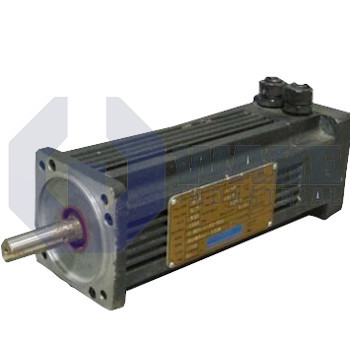
The Kollmorgen B-204-A-99-056 is part of the Goldline B and BH Motors series and has a continuous stall torque of 4.47 Newton-meters. This motor features a back EMF constant of 100.5 Vrms per kRPM and operates with a DC resistance of 9.46 ohms. It has a torque constant of 1.66 Newton-meters per Arms and accommodates 4 poles.
Internal Product Review
The B-204-A-99-056 is a Kollmorgen Goldline B and BH motor with 4.47 N-m continuous stall torque and a 1.66 N-m/Arms torque constant. A 100.5 Vrms/kRPM back EMF constant paired with 133 mH inductance supports stable, controlled servo performance. Strong torque output and predictable electrical behavior make the motor a very capable choice for demanding motion applications.
 Have a part to sell?
 Wake Industrial Warranty
To contact sales for pricing and lead time:
Payment Methods


Shipping Methods


Our Credentials


Product Description:
The B-204-A-99-056 is a brushless servo motor built by Kollmorgen as part of the Goldline B and BH Motors series. Intended for closed-loop motion axes, the unit converts drive current into controlled shaft torque and speed for pick-and-place modules, conveyors, and other positioning stages within industrial automation systems. This permanent-magnet motor is commonly paired with Servostar and AKD drives, creating a matched electromechanical package for repeated production duty. Its brushless design also supports accurate response with low maintenance because there are no brushes to wear during normal operation.
A continuous stall torque of 4.47 N-m is the sustained load the shaft can hold without motion when current is regulated at rated temperature. The torque constant of 1.66 N-m/Arms translates drive current into rotational force, which helps the drive produce predictable torque output. A back-EMF constant of 100.5 Vrms/kRPM shows the voltage generated per thousand revolutions and is useful when matching motor speed to the available drive bus voltage. Electrical behavior is influenced by the phase resistance of 9.46 ohms and the winding inductance of 133 mH, which affect current ripple, transient response, and heat generation. At 25 °C, the motor can withstand a momentary stall torque of 4.7 N-m, giving a small margin above the continuous value for intermittent duty.
The rotor’s mass moment of 0.000173 kg·m² supports rapid speed changes, and when combined with the four-pole magnetic structure it allows a calculated theoretical acceleration of 79200 rad/s² at peak current. That low inertia can be helpful in systems that start, stop, and reverse frequently during short indexing moves. Drive bus limits must remain below 250 Vrms line to line, which is the maximum voltage the insulation system can tolerate. Static friction is specified at 0.1 N-m, so the control loop can overcome stiction with only a small torque offset. Heat produced during operation leaves the frame through a thermal path rated at 0.74 °C/W, allowing continuous running in ambient air up to 40 °C without additional cooling.