


RZP01.1-G1 Bosch Rexroth Indramat
Wake Industrial LLC is not an authorized distributor of this product.
MPN: R911200005
No Tariffs On US Orders- Straightforward Pricing: No Rush Fees, No Credit Card Fees
Current response time:
5 Minutes
51 Seconds
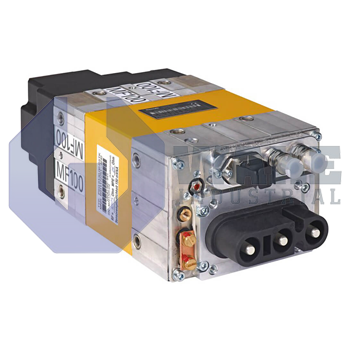
The Bosch Rexroth Indramat RZP01.1-G1 is an interface module from the RZP Option Modules series. It features TTL pulse encoder input with RS422 differential signal standards and supports a maximum input frequency of 300 kHz. The module includes a 15-pin Sub-D input connector and measures 100 by 89 millimeters.


To contact sales for pricing and lead time:
Payment Methods


Shipping Methods


Our Credentials


Product Description:
The RZP01.1-G1 is an option module produced by Bosch Rexroth Indramat within the RZP Option Modules series. Intended for drive-based motion systems, this board installs on a controller carrier and conditions encoder feedback signals for closed-loop positioning tasks in industrial automation. By providing a dedicated interface for high-speed resolver or incremental pulse streams, it frees the main drive logic from additional wiring while maintaining precise timing between motor movement and commanded trajectories.
Its logic circuitry is powered from the host backplane through internal rails of +5 V and +15 V, eliminating the need for an external supply. Incoming position data enters through a 15-pin Sub-D connector and must conform to a TTL pulse encoder format with an RS-422 differential line code. The board presents an input impedance of 120 ohms to match the transmission line and maintain signal integrity, and it tolerates common-mode or ground-referenced excursions up to ±10 V without damage. With a maximum input frequency of 300 kHz, it can track high-speed axes, while the encoder supply current available to the sensor reaches 300 mA. Physical dimensions of 100 × 89 mm let the card fit within standard controller slots.
After conditioning, the module routes position information to downstream electronics through a 9-pin Sub-D connector that drives the bus in the same differential format. The differential output swing is at least 2.5 V across a 120-ohm load, providing clear logic transitions even in electrically noisy cabinets. For resolver interfacing, the board marks each mechanical revolution with one zero pulse and divides every electrical period into 1024 increments, giving the controller fine angle resolution. The assembly is suitable for control cabinets that meet class 3K3. The output stage operates within the available current budget of the module.









