

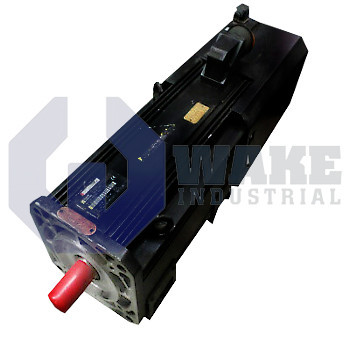
MAD180D-0150-SA-S0-FH2-35-N1 Bosch Rexroth Indramat
Wake Industrial LLC is not an authorized distributor of this product.
MPN: R911318855
No Tariffs On US Orders- Straightforward Pricing: No Rush Fees, No Credit Card Fees
MAD180D-0150-SA-S0-FH2-35-N1 Spindle Motor manufactured by Bosch Rexroth Indramat. This motor has a cooling mode with an Axail Fan, Blowing and a Singleturn Absolute, 2048 increments encoder. It also has a mounting style of Flange and a Standard bearing.


To contact sales for pricing and lead time:
Payment Methods


Shipping Methods


Our Credentials


Product Description:
The MAD180D-0150-SA-S0-FH2-35-N1 is a 180 series motor in the entire MAD series of servo motors, which is known to be the largest frame size with a diameter size of 350 mm and a length of 1092 mm, making this motor big in size and also heavy duty since it weighs around 395 kg owing to the all-aluminum design. The all-aluminum design helps keep this motor safe against rust, as the enclosure of this servo motor comes coated with black prime paint that keeps it sealed and protected against oxidation.
This AC motor comes with a lot of features to enhance your control process as this servo can be controlled with a serial connection using the RS 232 and RS 485 serial connections which are supported by most of the motor control modules including DSC and TDK controller for which these servos are specifically designed. The motor comes with an encoder that supports only single-turn rotation and uses the EnDat 2.1 digital communication interface with a step count resolution of 512 increments.
This servo motor also comes with a braking system that allows this servo motor to generate a locked rotor torque of 360 Nm, which is more compared to its rated torque of 340 Nm. The holding brake is the electrically released type with a holding torque rating of 240 Nm that prevents the shaft from slipping when needed to position the shaft in a particular position of interest, especially in robotics applications. This holding brake requires 24 volts DC to operate and needs 1.87 amperes of current to engage the brake. The engagement time of the brake is 30 ms, while the disengagement delay is 300 ms to ensure safe operation.