

MAD180C-0150-SA-C0-EQ0-35-N1 Bosch Rexroth Indramat
Wake Industrial LLC is not an authorized distributor of this product.
MPN: R911335633
No Tariffs On US Orders- Straightforward Pricing: No Rush Fees, No Credit Card Fees
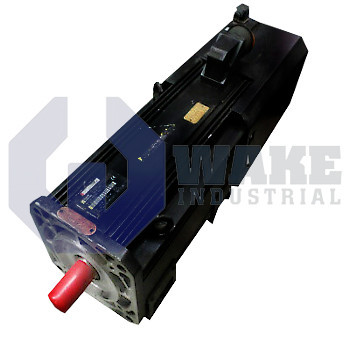
MAD180C-0150-SA-C0-EQ0-35-N1 Spindle Motor manufactured by Bosch Rexroth Indramat. This motor has a cooling mode with an Axail Fan, Blowing and a Singleturn Absolute, 2048 increments encoder. It also has a mounting style of Flange and a Standard bearing.


To contact sales for pricing and lead time:
Payment Methods


Shipping Methods


Our Credentials


Product Description:
The MAD180C-0150-SA-C0-EQ0-35-N1, has a frame size that spans 979 mm and weighs 334 kilograms, this motor model is suitable for large-scale factories and machines requiring a very high output torque. Manufactured by Rexroth Indramat, the MAD180C-0150-SA-C0-EQ0-35-N1 has a standard bearing type but no blocking brake. In the absence of a blocking brake, the motor halts normally by disconnecting it from the supply. Like most MAD motors, its default cooling mechanism uses axial blower fans that are typically on the rear side of the motor. The idea behind axial fans is to blow air in a direction parallel to the rotor’s shaft. |
During nominal operation, the motor runs at a speed of 1500 rpm. During this operation mode, the expected current draw is around 88.6 A at a terminal power of 42.3 kW. The output torque of the motor is a quantity that is directly proportional to the power output but inversely proportional to the motor speed. At rated conditions, the rated torque of the MAD180C-0150-SA-C0-EQ0-35-N1 is 270 Nm. When the rotor is forced to remain stationary, as in the case during the starting period, the standstill parameters of the motor are as follows: 300 Nm and 90 A. During the stall condition, a higher inrush current is expected. For this very reason, the protection devices for motors are designed to accommodate standstill values instead of rated ones.
Having a standard bearing type, the MAD180C-0150-SA-C0-EQ0-35-N1 has a projected maximum speed of 6000 rpm. However, operating the motor at this speed may not be advantageous, as the torque of the motor is inversely proportional to the speed. Hence, higher values of motor speed almost always lead to lower output torque values.









