

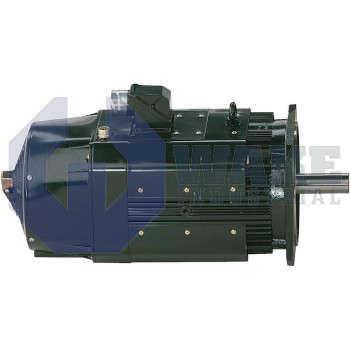
MAD160B-0100-SA-S2-AP1-35-R1 Bosch Rexroth Indramat
Wake Industrial LLC is not an authorized distributor of this product.
MPN: R911319557
No Tariffs On US Orders- Straightforward Pricing: No Rush Fees, No Credit Card Fees
MAD160B-0100-SA-S2-AP1-35-R1 Spindle Motor manufactured by Bosch Rexroth Indramat. This motor has a cooling mode with an Axail Fan, Blowing and a Singleturn Absolute, 2048 increments encoder. It also has a mounting style of Flange and a Standard bearing.


To contact sales for pricing and lead time:
Payment Methods


Shipping Methods


Our Credentials


Product Description:
A speed rating of 1000 rpm along with a torque rating of 200 Nm at this speed makes the MAD160B-0100-SA-S2-AP1-35-R1 a great motor that does not require a lot of input energy to generate such a high level of torque. This motor comes with the R1 configuration of the bearings, which translates to high-speed-reinforced bearings that allow the servo motor to generate a rotational speed of 6000 rpm, producing 440 Nm of torque. In the case of locked rotor mode, where the shaft of the servo is locked in a particular position, the MAD160B-0100-SA-S2-AP1-35-R1 has a locked rotor torque of 210 Nm.
The AP1 configuration offers a couple of features. For example, it comes with a connector for power and encoder attached to side A of the servo motor, which is the front side of the motor that features an M2 360-degree rotatable connector. The shaft seal ring helps cover the front diameter of the servo motor and is made of a rubber-type material that prevents anything from entering or exiting the servo enclosure, helping keep the motor sealed from the front.
The electrically released holding brake on this servo motor is an additional feature that helps hold the shaft of the servo motor from spinning. It provides a holding torque of 100 Nm and can keep the shaft in a fixed position even if the motor loses power, while the maximum speed that it supports is 7000 rpm. The permissible transmittable energy for this braking system is 40000 Ws. The brake is also fairly quick to engage, as it has an engagement delay of 12 ms, while the disengagement delay is around 190 ms to ensure safe disengagement.









