

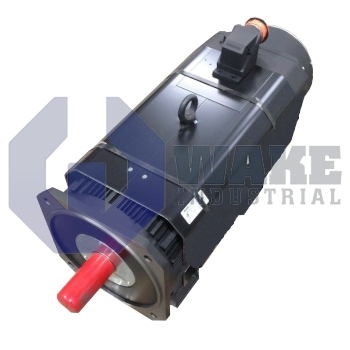
MAD100C-0150-SA-S0-BP0-05-N1 Bosch Rexroth Indramat
Wake Industrial LLC is not an authorized distributor of this product.
MPN: R911318385
No Tariffs On US Orders- Straightforward Pricing: No Rush Fees, No Credit Card Fees
MAD100C-0150-SA-S0-BP0-05-N1 Spindle Motor manufactured by Bosch Rexroth Indramat. This motor has a cooling mode with an Axail Fan, Blowing and a Singleturn Absolute, 2048 increments encoder. It also has a mounting style of Flange and a Standard bearing.


To contact sales for pricing and lead time:
Payment Methods


Shipping Methods


Our Credentials


Product Description:
A servo motor is the perfect automation equipment needed for performing controlled tasks with defined mechanical limits, and MAD100C-0150-SA-S0-BP0-05-N1 is the perfect one as it comes with a single-turn encoder with 512 increments of resolution, which ensures the motor provides high-accuracy output. This 48 Nm servo motor needs 275 volts AC to operate and can draw around 19.7 amperes of current, and comes with a power rating of 7.5 kW. This motor features the power and encoder connector on the left side of the servo motor, and all the connectors are 360-degree rotatable.
The servo motor comes with a frame of size C, and it is 273 mm long in length and has a width of 208 mm by 208 mm. The centering diameter of this servo motor is 130 mm, making the motor compact and easy to install, as this motor is also lightweight weighing approximately 55 kg. This motor comes with a rotor inertia of 0.0284 kgm² that ensures that this servo motor is able to rotate quickly towards the top speed of the servo, which is 9000 rotations per minute.
Keeping the area ventilated is of highest importance, as keeping the motor temperature as close to 20 degrees Celsius is recommended for efficient operation, since the recommended operating temperature range lies between 0 degrees Celsius to 40 degrees Celsius, with 20 degrees Celsius being the optimum. In the case where the motor is being stored, it should always be stored in a room with a temperature between -20 degrees Celsius to 80 degrees Celsius as this helps the motor keep its internals protected against temperature creep that may affect the performance in the long run.