


CLC-V02.3C-FW Bosch Rexroth Indramat
Wake Industrial LLC is not an authorized distributor of this product.
Wake Industrial LLC is not an authorized distributor of this product.
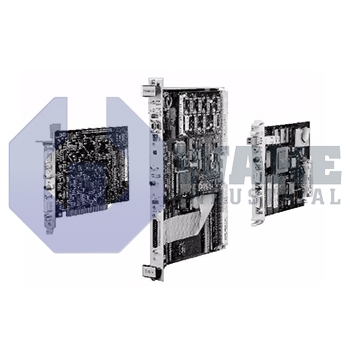
The Bosch Rexroth Indramat CLC-V02.3C-FW is part of the CLC Motion Controllers series and features a 68020 CPU with a clock frequency of 25.0 MHz. It is equipped with 32 Kbytes of battery-backed SRAM, 1 Mbyte of flash EPROM, and 2 Mbytes of shared SRAM. The controller provides 12 digital inputs, 4 digital outputs, and supports 2 RS-232C serial ports.
Internal Product Review
The CLC-V02.3C-FW is a Bosch Rexroth Indramat motion controller built around a 68020 CPU at 25.0 MHz. A set of 12 digital inputs and 4 digital outputs gives the controller practical flexibility for machine interfacing. Dedicated SERCOS input and output ports are a strong advantage for precise motion coordination.
 Have a part to sell?
 Wake Industrial Warranty
To contact sales for pricing and lead time:
Payment Methods


Shipping Methods


Our Credentials


Product Description:
The CLC-V02.3C-FW is a controller card supplied by Bosch Rexroth Indramat within the CLC Motion Controllers series. Mounted in a VME rack, the unit coordinates multi-axis drives by interpreting application code and dispatching real-time motion commands to the drive network. In industrial automation lines, it acts as the central processor that links higher-level PLC logic to SERCOS or serially connected drives, allowing synchronized positioning and velocity profiles without dedicating a full PLC slot to each axis.
Its computing core is a Motorola 68020 processor clocked at 25.0 MHz, giving deterministic scan cycles compatible with high-speed material handling and packaging tasks. Numerical operations that would burden the main CPU are offloaded to a 68882 math coprocessor, so trigonometric and floating-point routines execute quickly. Program and parameter images reside in 1 Mbyte of Flash EPROM, while dynamic variables are retained in battery-backed SRAM sized at 32 Kbyte. This memory preserves machine coordinates and error logs when the main supply is removed, which supports a faster restart after power returns.
For data exchange during operation, the board provides 2 Mbyte of shared SRAM that can be accessed by the VME host without bus contention. The board has 12 optically isolated inputs and 4 sourcing transistor outputs, permitting direct monitoring of limit switches or status lamps at up to 300 mA each. It also includes two RS-232C channels for parameter download, while one SERCOS fiber input and one output create a ring interface to servo amplifiers. The VME implementation handles A32, A24, and A16 addressing, D8, D16, and D32 data widths, four arbitration levels, and eight mailbox interrupts, allowing the host CPU to trigger the controller deterministically without tying up the system bus.









