


CLC-D02.3M-FW Bosch Rexroth Indramat
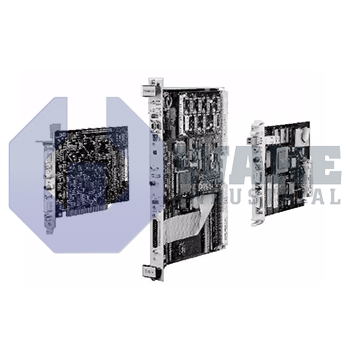
Wake Industrial LLC is not an authorized distributor of this product.
- Straightforward Pricing: No Rush Fees, No Credit Card Fees
The Bosch Rexroth Indramat CLC-D02.3M-FW is part of the CLC Motion Controllers series and features two serial ports with RS-232, RS-422, and RS-485 support. It includes a 7-segment LED diagnostic display and uses a CR2477N lithium backup battery at 3 V. This controller supports a default baud rate of 9600, has fiber-optic Sercos ports, and a watchdog refresh interval of 100 milliseconds.


To contact sales for pricing and lead time:
Payment Methods


Shipping Methods


Our Credentials


Product Description:
The CLC-D02.3M-FW is a digital motion controller produced by Bosch Rexroth Indramat within the CLC Motion Controllers series. It supplies trajectory generation, axis synchronization, and network handling functions so that servo drives in packaging, printing, or material-handling equipment follow precise setpoints. The unit mounts on a DIN rail next to the drives, translating high-level commands into deterministic Sercos telegrams or conventional serial frames and serving as the central sequencing element inside an automated cell.
The controller preserves configuration data with a backup battery of 3 V, provided by a CR2477N lithium coin cell. A 100 ms watchdog interval supervises controller tasks, forcing a reset if refresh commands are missed. Both serial ports X27 and X28 power up at 9600 baud in RS-232 mode and use the 8-N-1 character frame, which includes eight data bits, no parity, and one stop bit. Port A can switch to RS-232/RS-422/RS-485 electrical layers and always uses the VisualMotion ASCII Host Protocol. Port B starts with the Host Protocol but may be disabled or assigned to BTC06, and checksum verification is enabled by default on every port so corrupted packets are discarded before they reach the motion kernel.
Sercos communication is handled through dedicated Tx and Rx fiber connectors that build a Fiber-Optic Ring for deterministic, collision-free telegram exchange between the controller and its drive nodes. Status codes appear on the H4 panel through a 7-Segment LED, providing an immediate numeric fault reference. The ports support separate transmit and receive channels, while default baud rates and checksum settings can be modified through host commands to accommodate faster line speeds. With two serial ports, selectable protocols, and fiber networking, the device bridges local HMIs to multi-axis drive systems without external gateways.









