


CLC-D02.3 Bosch Rexroth Indramat
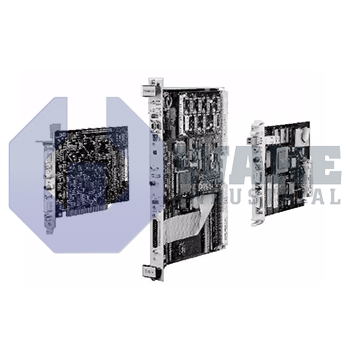
Wake Industrial LLC is not an authorized distributor of this product.
Wake Industrial LLC is not an authorized distributor of this product.
The Bosch Rexroth Indramat CLC-D02.3 is a motion controller from the CLC Motion Controllers series. It features a 25 MHz 68EC020 CPU with a 68882 math coprocessor and 1 Mbyte EPROM capacity. The controller offers RS-232, RS-422, and RS-485 serial interfaces, supports 2 ms or 4 ms Sercos cycle times, and is powered by a +5 VDC, 800 mA supply.
Internal Product Review
The CLC-D02.3 is a Bosch Rexroth Indramat motion controller built around a 68EC020 CPU running at 25.0 MHz. Selectable 2 ms / 4 ms SERCOS cycle times and dual serial ports support responsive integration in coordinated drive systems. A compact one-slot form factor makes the unit an efficient choice for dense control architectures.
 Have a part to sell?
 Wake Industrial Warranty
To contact sales for pricing and lead time:
Payment Methods


Shipping Methods


Our Credentials


Product Description:
The CLC-D02.3 is a motion controller produced by Bosch Rexroth Indramat for the CLC Motion Controllers series. Designed to occupy one Indramat drive slot, it coordinates multi-axis drives through a Sercos fiber-optic ring within the same cabinet. By generating position setpoints and handling interpolation internally, the unit offloads the machine PLC and maintains deterministic timing for servo loops. It is used in packaging, printing, and material-handling equipment where synchronized axes, short cycle times, and compact control hardware are required. Centralizing interpolation in the controller helps multiple axes follow the same motion profile during coordinated machine movements. Its modular electronic layout also supports compact installation in shared control cabinets.
Processing is handled by a 68EC020 CPU clocked at 25.0 MHz. Program code is stored in an EPROM array sized at 1 Mbyte, while volatile data, cam tables, and runtime variables reside in 512 Kbyte of battery-supported SRAM. Floating-point instructions are executed by the dedicated 68882 coprocessor that shares the local bus, reducing calculation latency for polynomial and trigonometric functions used in motion profiles. That arrangement is useful when the application calculates curves, cams, and interpolation values in real time instead of relying only on fixed lookup data. The installed hardware supports axis-position updates, fieldbus traffic, and error handling without overrunning the selected network cycle.
Logic power enters through the backplane at +5 Vdc, 800 mA, which helps keep heat dissipation low in dense cabinet layouts. Servo networking relies on the SERCON410B ASIC, and the controller can use 2 ms / 4 ms ring slots to match the number of connected drives. For local service access, the board includes two asynchronous ports that accept RS-232, RS-422, RS-485 signals for program transfer and status tracing. This allows the controller to interface with different external communication standards through the same onboard hardware. The module operates between +5 °C and +45 °C and withstands storage down to −30 °C, provided absolute humidity does not exceed 25 g/m³.









